




Product prices from metal rates: a store that keeps up with the gold and silver market on its own
Gold, silver, platinum and palladium rates can move noticeably within a single day. For a store that sells coins and bars, a price from an hour ago may already be out of date. In the Mennica Sądecka store the prices of all precious metal products calculate themselves: every 10 minutes, from the current rate in Polish zloty and from the amount of pure metal in each coin and bar.
In short
- Challenge: coin and bar prices have to follow a metal rate that changes all day long.
- Solution: every 10 minutes the store downloads the rates of four metals in zloty and recalculates all product prices.
- Metal content: the price follows weight and fineness, that is the amount of pure metal, not just the weight of the product.
- Control: the margin, the minimum price and temporary adjustments stay in the seller’s hands.
About the client: Mennica Sądecka
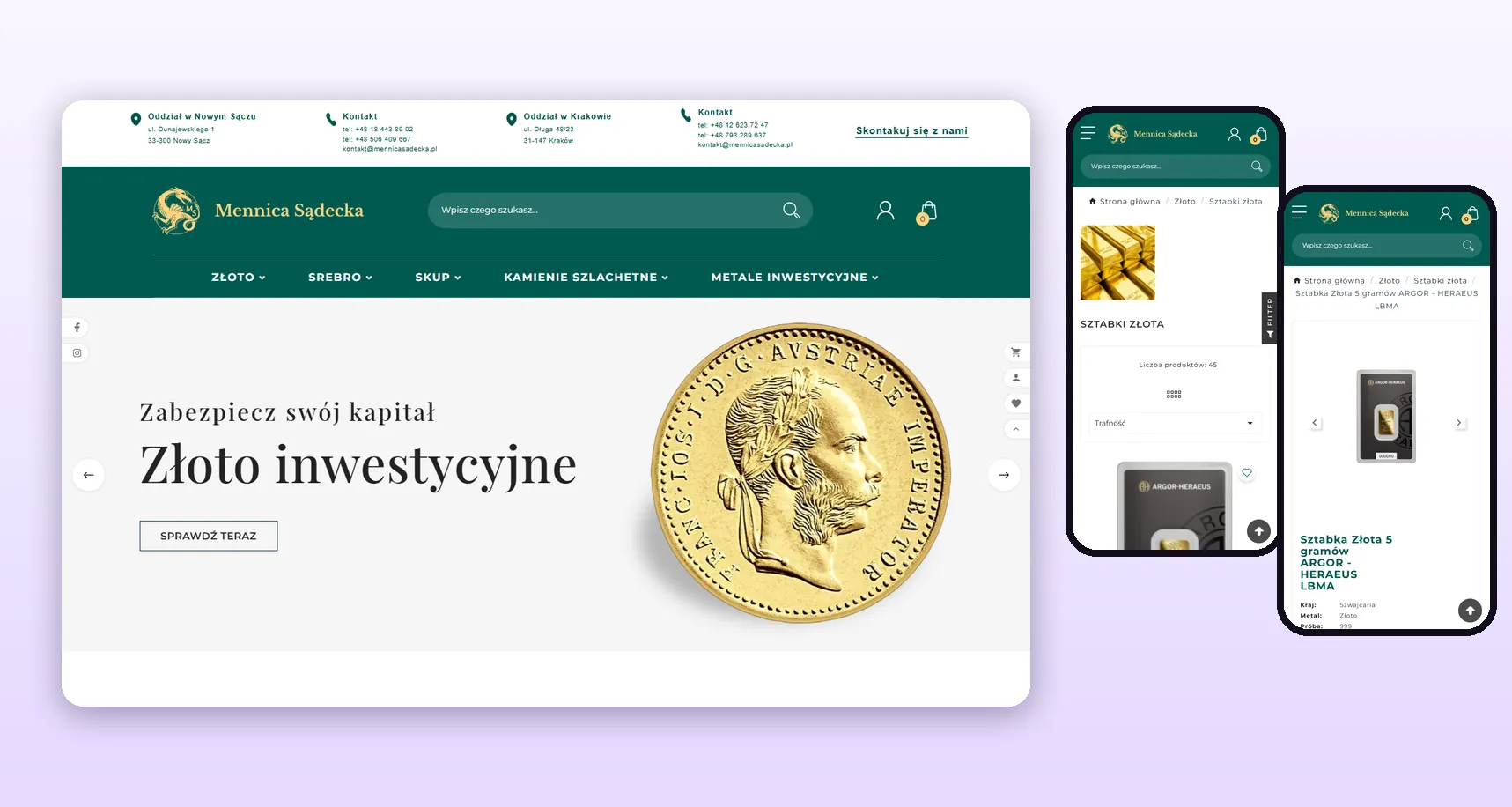
Mennica Sądecka is a precious metals dealer with branches in Nowy Sącz and Kraków, Poland. Its online store sells gold and silver bullion coins and bars of gold, silver, platinum and palladium, also offers investment copper and buys metals back. It is the same store that runs a catalog of over 450,000 diamonds. Here we describe its other part: metals.
The challenge: a price that goes stale in minutes
The value of a bar or a bullion coin is first of all the value of the metal it is made of. When the rate rises, a store with an outdated price list sells below value. When the rate falls, prices that are too high put customers off. With large swings in the market, correcting prices by hand a few times a day is no longer enough, and every mistake costs real money.
A manual price list
- Prices corrected once or a few times a day
- The risk of selling below value after a jump in the rate
- Every product recalculated separately, with a calculator
- The buyback price agreed over the phone
- A staff member watches the market instead of serving customers
Prices from the rate
- The price list recalculated every 10 minutes, around the clock
- The price always matches the current rate
- The store accounts for the weight and fineness of every product
- The buyback price shown next to the selling price
- The team sets margins and the system does the rest
How it works: from a market quote to a price in the store
The whole process repeats automatically every 10 minutes and takes a few seconds. Nobody has to start or supervise it.
1. Downloading the rates
The store downloads current quotes for gold, silver, platinum and palladium from a market data service.
2. The rate in zloty
Metals are priced worldwide in dollars per ounce. The store works on a rate converted to zloty, so the price also reflects the current dollar exchange rate.
3. The amount of pure metal
For each product the system multiplies the rate by weight and fineness. A .900 coin and a .999 bar of the same weight hold a different value of metal.
4. Margin and saving the price
The margin set for the product is added to the metal value. The new price is saved in the store and the customer sees it right away.
Formula and example
The rule is simple, which makes it transparent for both the seller and the customer.
metal rate × weight × fineness, plus the product margin
The result cannot fall below the minimum price set for the product.
| Product | Pure metal | Metal value |
|---|---|---|
| 1 oz bar, .999 fineness | 1 oz | PLN 15,900 |
| 1/10 oz coin, .999 fineness | 0.1 oz | PLN 1,590 |
| Coin weighing 1 oz, .900 fineness | 0.9 oz | PLN 14,310 |
An illustrative example for a gold rate of PLN 15,900 per ounce (the level of 11 November 2026), without margin. When the rate changes by 1%, the value of each of these items changes by 1% at the next update.
The buyback price is calculated the same way
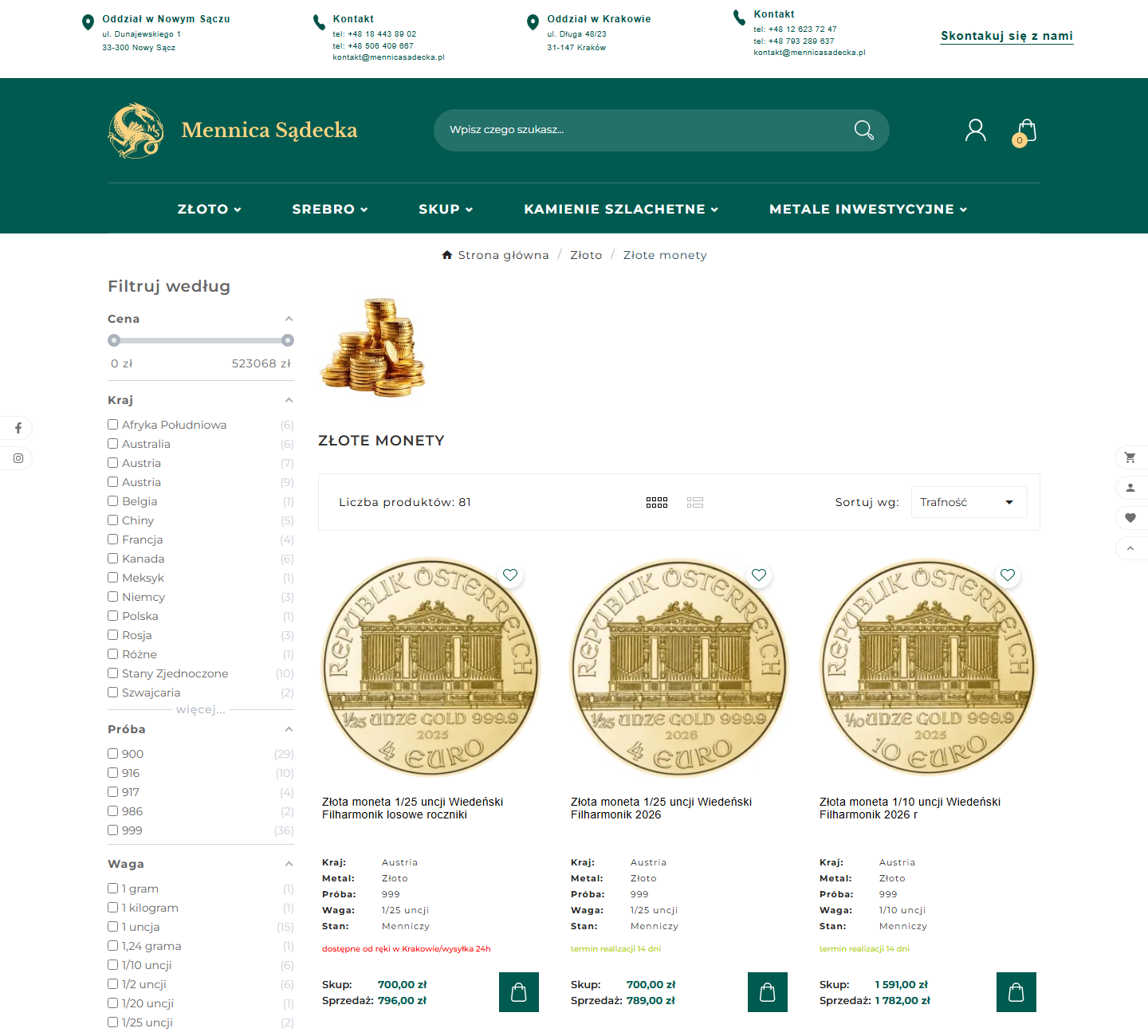
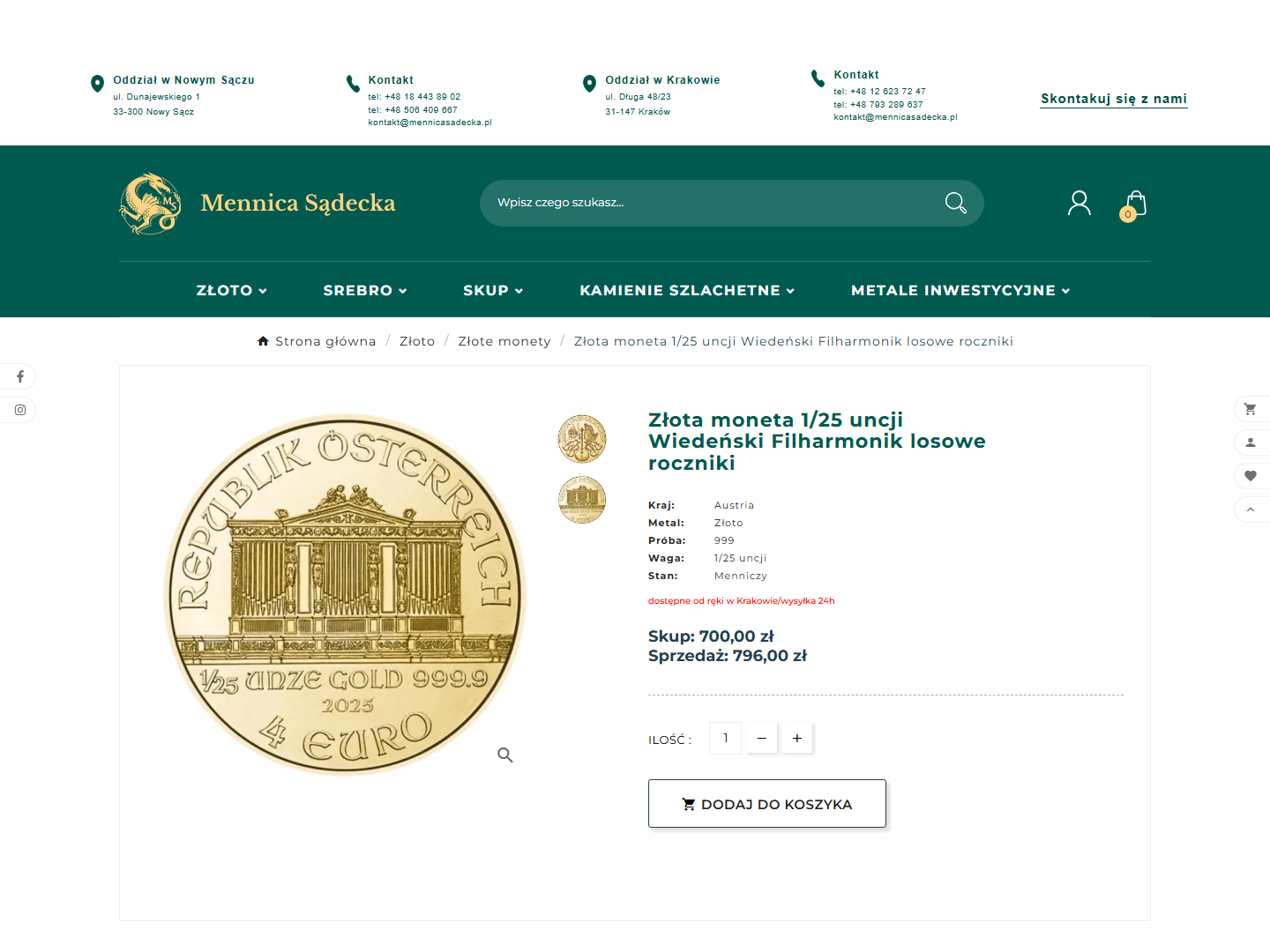
Mennica not only sells but also buys coins and bars back. That is why products show two amounts: the selling price and the buyback price. The buyback price comes from the same rate, with a separate margin, and updates at the same moment as the selling price. The customer immediately sees the spread between them, which is basic information in metal trading.
Control over the price stays with the seller
Automation does not mean losing control. The seller sets the rules and the system applies them at every recalculation.
A margin for every product
A percentage or a fixed amount, separately for selling and for buyback. A popular coin can carry a different margin than a rare year.
Minimum price
A floor the price will not go below, even when the rate drops sharply.
A temporary adjustment for a whole metal
For a chosen period, such as a weekend or a holiday, the prices of all products made of a given metal can be raised by a set percentage. The adjustment switches itself off afterwards.
Exceptions
Selected products can be excluded from automatic pricing and priced by hand.
Where else this mechanism works
Precious metals are the most striking example, but the same principle works wherever a product price depends on a changing index.
- Jewelers and buyback shops: pricing gold and silver items by fineness and weight
- Stores with goods bought in euros or dollars: prices that follow the exchange rate
- Raw materials: steel, copper and plastics priced according to market quotes
- Wholesalers: price lists that depend on supplier prices downloaded automatically
- Industries with a price of the day: fuels, grain, heating fuel
What it delivers
Margin protected during swings
After a jump in the rate the store does not sell at an old price that is too low. After a drop it does not lose customers because of one that is too high.
No more manual price lists
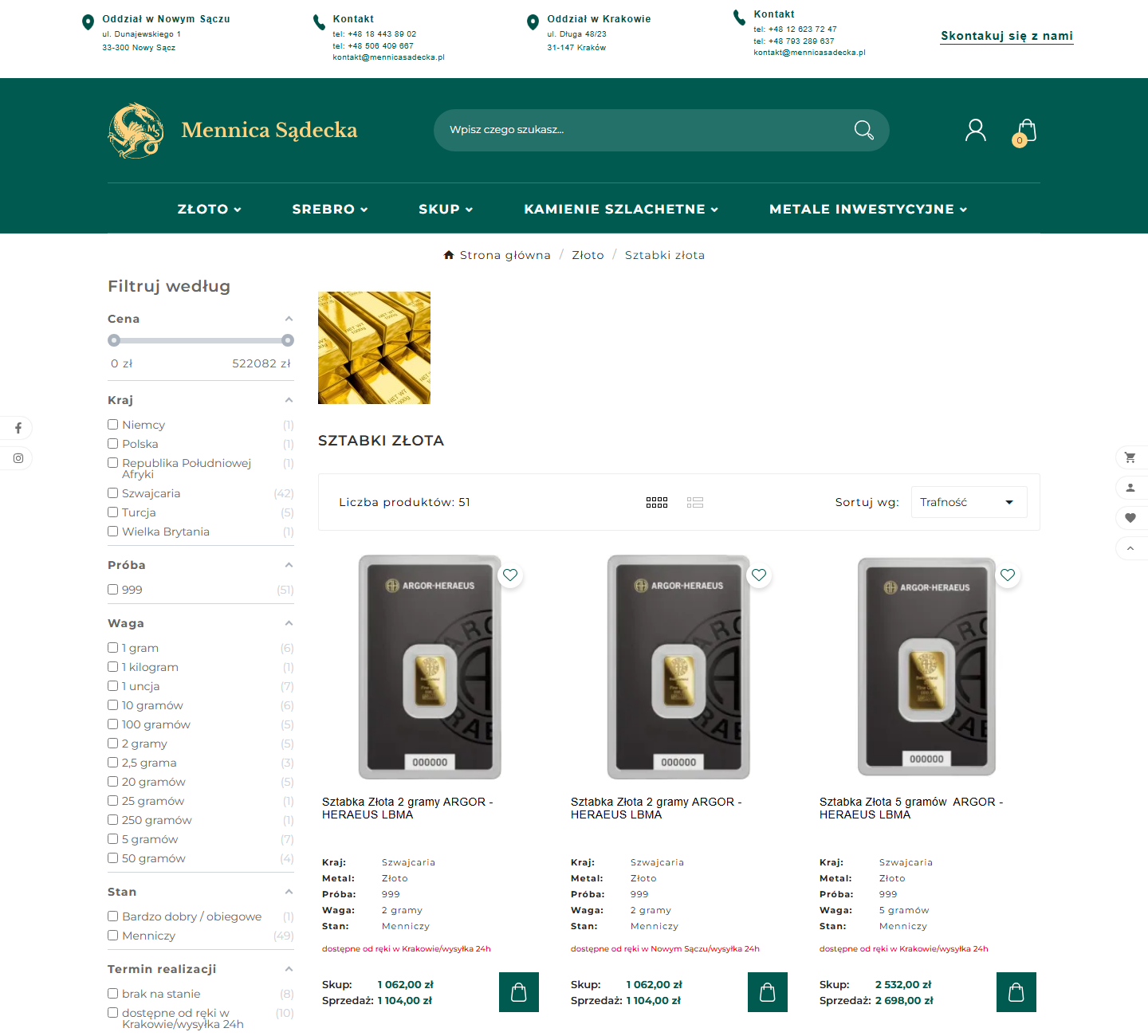
Nearly 200 coins and bars recalculate on their own, 144 times a day, including nights and weekends.
Customer trust
The buyer sees a price in line with the market and the price at which the product can be sold back.
A fast response
A new margin or a temporary adjustment takes effect at the next recalculation, that is within minutes.
Scope of work
- Downloading gold, silver, platinum and palladium rates every 10 minutes
- Rates converted to Polish zloty
- Pricing products from the weight and fineness of the metal
- Percentage and fixed margins, separately for selling and buyback
- A minimum product price
- Temporary price adjustments for a selected metal
- Buyback prices shown on listings and product pages
- Ongoing care of the mechanism
Do your prices depend on a rate, market quotes or a supplier’s price list?
We will show you how to make the store recalculate them on its own, according to your rules. See how we approach integrations and automation.